Book · Adult
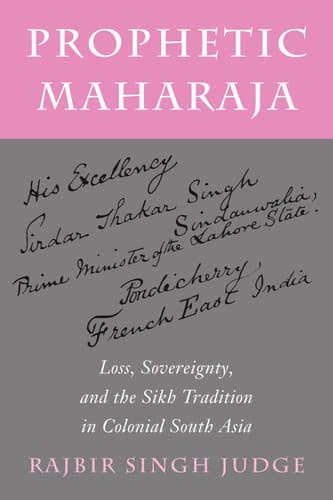
Prophetic Maharaja: Loss, Sovereignty, and the Sikh Tradition in Colonial South Asia
Loss, Sovereignty, and the Sikh Tradition in Colonial South Asia
Honors

Get the book
We may earn a commission when you buy through links on this page. It never affects which books we recommend. As an Amazon Associate, we earn from qualifying purchases.
About the book
"The Sikh stronghold of Khalsa Raj, established in 1801 by Ranjit Singh, which united the warring confederacies of Northwest India, began to unravel after his death in 1839. By 1849, the British Empire had annexed Punjab and exiled its maharaja, Duleep Singh. Duleep Singh continued his attempts to reinstate Sikh rule in the 1880s, even though it was irretrievably lost. This moment at the end of the nineteenth century serves as the setting for Prophetic Maharaja as it investigates of how a tradition engaged military, political, and psychological loss through a variety of means-theological debate, literary production, bodily discipline, and ethical practice-in order to undo the dominant contours of colonialism. There is no resolution in the face of loss, and the book does not attempt to provide it. By considering Indigenous and colonialist imaginaries together, Rajbir Singh Judge demonstrates that societal, religious, and political change is irreducible to any singular circumstance, since the mere act of engaging with loss destabilizes all formations. Yet the Sikh people struggled to make sense of a world that was vanishing, of the losses they had endured and the impossible sovereignty they wished to reclaim. Loss, Judge argues, can initiate the political and ethical struggle to contend with it rather than accepting it as a fait accompli"--
For parents
No age or grade range recorded.