 Pulitzer
Mice 1961
Pulitzer Prize Finalist
Book · Adult
We may earn a commission when you buy through links on this page. It never affects which books we recommend. As an Amazon Associate, we earn from qualifying purchases.
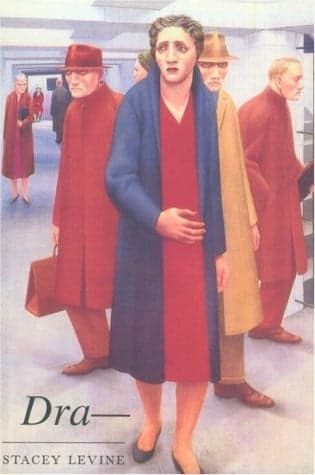
Amazon.com Review Dra-, the incompletely named anti-heroine of this brilliant novel, is trying to get a job. She isn't sure what kind of job, or where, or what its purpose is, she only knows she must find one. Dra- wanders through the bleak, labyrinthine corridors of some great unnamed workplace getting unsolicited advice, which sounds more like seduction or therapy than career counseling, from characters with names such as Manager and Administrator and Nurse. The quirkiness and clarity of Stacey Levine's language, the comedy and darkness of her vision, mark her as a worthy heir of Jane Bowles. Product Description Dra-, Levine's first long fictional work, takes the reader into the comic, yet dystopic world of the title character, who inhabits a drab and dreary world of utter dread. The work begins with her visit to an employment agency which punishes the terrified woman for being unable to chose between potential jobs, culminating in a terrible vision of rage and torture which the all-controlling Administrator proclaims is merely a self-tyranny. Levine's new work explores, through a Kafka-like world, how the meek and sane are made mad in a society that demands choices that only lead to less and less individual choice and control. Levine's characters may have difficulty functioning in the so-called "normal" world, but in her exploration of that world we recognize that the terror they feel is justified as we witness, with increasing horror, the insanity of the world we ourselves inhabit. From Kirkus Reviews Kafkaesque first novel, the 39th entry in Sun & Moon's experimental New American Fiction series, from the author of My Horse (stories, not reviewed). One might almost say that Levine is slavishly Kafkaesque, down to her use of the tired device of incompletely spelling her protagonist's name: ``Dra--.'' Nonetheless, she takes on an important theme, focusing on the modern American obsession with jobs and careers. Poor Dra-- is a confused young woman, shy, indecisive, and paranoid. As the story begins, she's out of money and powerless, and proceeds to a nameless employment agency with the vague feeling that only a job can give her an identity. At first, Dra-- is afraid even to enter the agency because of her irrational fear of a man who works there. Once inside, she must endure a mockingly upbeat lecture on the virtues of holding a job, as well as a sort of group support session for those who have not ``succeeded.'' Finally, she's offered a choice: a job at a ``remote encampment'' researching and classifying dust, and one ``monitoring and maintaining a small water pump.'' Dra--, who seems always near mental collapse, can't choose between these equally meaningless alternatives. Even her employment counselor allows that ``jobs are tedious and death-making,'' and thus it may be that Dra-- is one of the saner inmates of this mad world. As she cringes and hesitates, postponing the inevitable, she eavesdrops on the conversations of working people, all of whom have adapted to that world, and seem truly and completely insane. Work is madness, Levine suggests, and anyone who has not had a ``career'' but has suffered instead through a succession of mind-numbingly banal jobs, is likely to agree. Levine's variations on Kafka wear thin, but her satire of work is clever, unsettling, and timely. -- Copyright ©1997, Kirkus Associates, LP. All rights reserved. Review The title character of Levine's first novel wanders searchingly through the labrynthine hallways of an anonymous government building, fixated on finding the Employment Office and a job. The florescent lights, iron-frame desks, and hunched working bodies of a nightmare bureaucracy compose Levine' postapocalyptic landscape, where the bewildered Dra--- must fend for herself. Ever-ripe for reprogramming, she is a blank slate--any image she sees "slips from her mind because she cannot hold it there"--and so is Dra--- itself. Its narrative is so self-con
No age or grade range recorded.
PulitzerPulitzer Prize Finalist