The Top Book List

Book versus film

Romeo and Juliet and West Side Story

Romeo and Juliet Adapted to West Side Story

Winner of 10 Academy Awards

Cover of Romeo and Juliet, 1750 by William Shakespeare
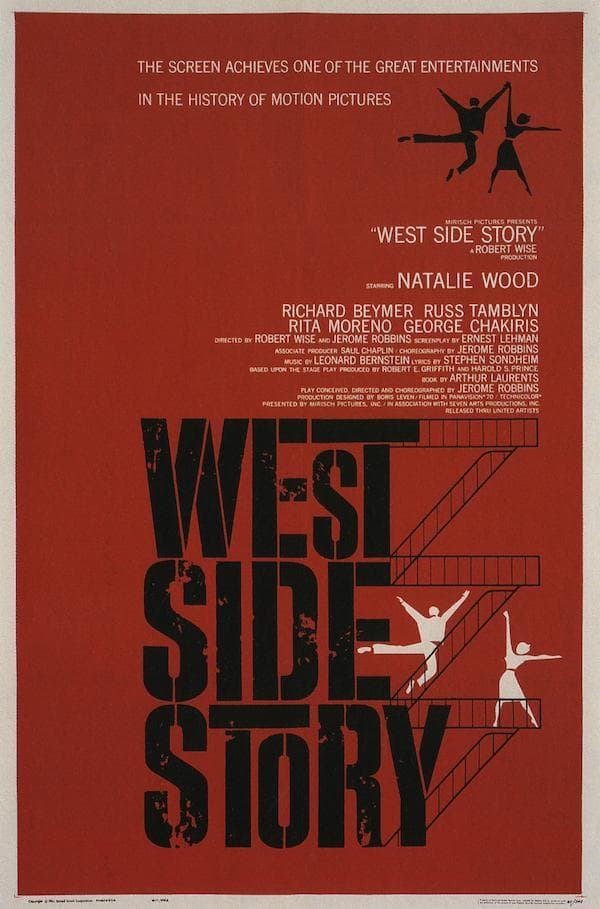
Poster for the film Romeo and Juliet Adapted to West Side Story

Two ways into the story

How the telling changes

While Shakespeare's Romeo and Juliet attributes its catastrophic romance to an ancient aristocratic blood feud governed by fatalistic "star-crossed" destiny, West Side Story transposes the tragedy into the socio-economic and racial frictions of mid-century Manhattan.

On the page

The book’s approach

Shakespeare structures Romeo and Juliet around cosmic fate, familial honor, and the volatile passions of youth. The feud between the Capulets and Montagues has no articulated political or ideological cause; it exists purely as an inherited, ancient cycle of civic violence that poisons Verona. The lovers are presented as victims of poor timing, ill-fated messages, and astrological doom ("star-crossed lovers"), where only their sacrificial deaths can finally expiate their parents' destructive strife.

About the book: Romeo and Juliet

On the screen

The film’s approach

Directors Robert Wise and Jerome Robbins (with Arthur Laurents' script and Leonard Bernstein/Stephen Sondheim's score) reframe the narrative through gritty urban realism, athletic choreography, and post-war American social sociology. The conflict is explicitly racial and economic: working-class European-American youths, anxious about their fading dominance, clash with newly arrived Puerto Rican immigrants chasing the American Dream. The tragedy stems not from cosmic bad luck, but from xenophobia, police indifference, and the systemic alienation felt by marginalized youth.

The adaptation

Four key differences

  1. The Book: The Montague-Capulet conflict is an ancient, aristocratic rivalry rooted in pride and dynastic status within the walled Italian city of Verona.
  2. The Movie: The enmity between the Jets and Sharks is fueled by race, immigration, and territorial anxiety over a collapsing neighborhood being demolished for urban renewal.
  3. The Book: Juliet uses a sleeping potion from Friar Laurence to fake her death; Romeo misses the explanatory letter, drinks poison by her crypt, and Juliet stabs herself with his dagger upon waking.
  4. The Movie: Maria never fakes her death; a false rumor of her murder is delivered to Tony out of vengeance after Anita is assaulted. Chino shoots Tony in the street just as he sees Maria alive. Maria does not commit suicide—she takes the gun, castigates both gangs for killing with hate, and survives

The essential thread

What remains

The Fateful Dance Encounter: The Capulet feast is re-imagined as a neutral high school gymnasium dance, where Tony and Maria lock eyes across a crowded floor, isolated by mutual wonder amid surrounding hostility.

The Balcony Scene: Romeo's nocturnal climb to Juliet’s orchard balcony becomes Tony singing "Tonight" outside Maria's tenement fire escape in the concrete alleys of New York.

The Escalating Rumble: Tybalt killing Mercutio and Romeo retaliating by slaying Tybalt directly matches Bernardo (Tybalt) stabbing Riff (Mercutio) during the highway underpass rumble, driving Tony (Romeo) to murder Bernardo in a fit of shock and grief.

The Unifying Funeral Procession: Just as Lord Capulet and Lord Montague join hands over their children's corpses at the play's end, members of both the Jets and the Sharks help lift Tony's body together, establishing a somber, silent truce forged through shared devastation.

Character comparison

Each character’s name in the book and in the film
The bookThe film
RomeoTony
JulietMaria
TybaltBernardo
MercutioRiff
The NurseAnita
ParisChino

Continue exploring

More stories from page to screen

View all adaptations