The Top Book List

Book versus film

Harry Potter and the Philosopher's Stone and Harry Potter and the Sorcerer's Stone

J. K. Rowling's book, reimagined by Chris Columbus in 2001.

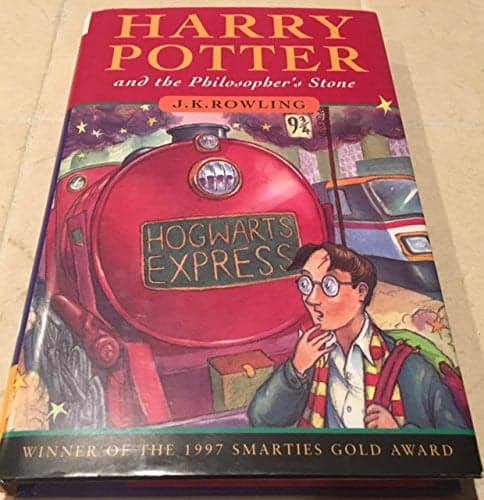
Cover of Harry Potter and the Philosopher's Stone by J. K. Rowling
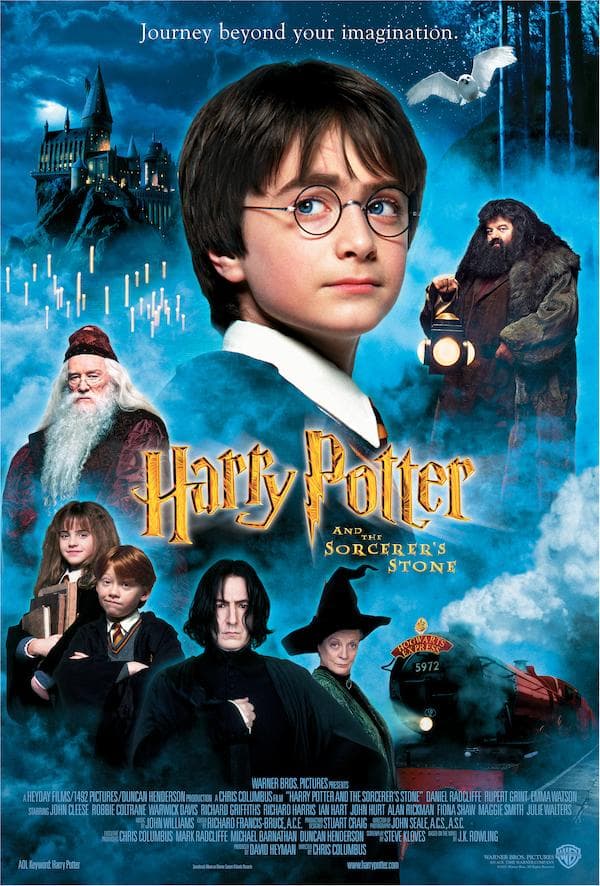
Poster for the film Harry Potter and the Sorcerer's Stone

Two ways into the story

How the telling changes

While J.K. Rowling’s original 1997 novel is an intricate British boarding-school mystery built on whimsical world-building and character subtext, Chris Columbus’s 2001 film adaptation operates as a streamlined, cinematic visual primer for a blockbuster franchise.

On the page

The book’s approach

Rowling approaches the story through British school-story traditions (reminiscent of Enid Blyton and Roald Dahl) interwoven with classic folklore. The novel spends extensive time establishing Vernon Dursley’s mundane, paranoid perspective, the day-to-day scholastic rhythms of Hogwarts, wizarding currency, social etiquette, and the bureaucratic rules of magic. Characters like Neville, Hermione, and Draco are shaped through small, accumulated social interactions, subplots, and humorous asides that emphasize Harry's gradual emergence from neglect into personal agency.

About the book: Harry Potter and the Philosopher's Stone

On the screen

The film’s approach

Director Chris Columbus and screenwriter Steve Kloves approach the material with deliberate fidelity designed to bring a beloved page-to-screen world to life without alienating existing readers. Prioritizing visual grandeur, John Williams’ sweeping orchestral motifs, and kinetic momentum, the film trims auxiliary character arcs and logistical clutter (such as sneaking dragons out of towers or extended potions riddles) in favor of high-energy set pieces like the Troll in the dungeon, Quidditch, and the giant Wizard’s Chess match.

The adaptation

Six key differences

  1. The Book: Getting rid of Hagrid's illegal Norwegian Ridgeback requires an elaborate covert mission: Harry and Hermione smuggle the crate up the Astronomy Tower at midnight to hand off to Charlie Weasley’s friends, accidentally leaving the Invisibility Cloak behind and earning detention.
  2. The Movie: The smuggling mission is cut entirely. Dumbledore simply sends Norbert away to Romania offscreen, and Malfoy catches the trio simply being out of bed at Hagrid’s hut past curfew.
  3. The Book: Each teacher contributes a defense: Sprout's Devil's Snare, Flitwick's winged keys, McGonagall's chessboard, Quirrell's unconscious mountain troll, and Snape's logic puzzle involving seven potion bottles and a riddle. Hermione solves the logic puzzle to allow Harry forward.
  4. The Movie: Snape’s potion trial and Quirrell's second troll are omitted entirely; after Ron sacrifices himself in McGonagall's chess game, Harry proceeds straight into the final chamber with the Mirror of Erised.
  5. The Book: Peeves is an ever-present chaotic nuisance dropping water balloons, singing insults, and constantly threatening to expose students sneaking through Hogwarts hallways.
  6. The Movie: Peeves was entirely excised from the final cut (despite actor Rik Mayall filming scenes), smoothing out Hogwarts into a more dignified, atmospheric Gothic castle rather than an unruly, chaotic madhouse.

The essential thread

What remains

The Core Structural Mystery: The investigation into Nicholas Flamel, the three-headed dog Fluffy guarding the trapdoor, and the assumption that Snape is plotting to steal the Stone for Voldemort.

Iconic Dialogue and Beats: Lines like "It takes a great deal of bravery to stand up to our enemies, but just as much to stand up to our friends" and the letter flood through the Dursleys' fireplace remain direct adaptations.

The Climax Twist: Professor Quirrell unravels his turban to reveal Lord Voldemort sharing his body, Harry retrieves the Stone via the Mirror because he does not intend to use it, and Harry's mother's ancient protection physically burns Quirrell upon contact.

The "Philosopher" vs. "Sorcerer" Dual Title: Scholastic famously retitled the US book release Sorcerer's Stone fearing American children wouldn't buy a book with "Philosopher" in the title; the film obliged by shooting every scene referencing the Stone twice (once with actors saying "Philosopher's" and once with "Sorcerer's") to distribute identical dual-cut edits matching each market's respective book title.

Continue exploring

More stories from page to screen

View all adaptations